
Class aptent sociosqu ad litora torquent per conubia nostra, per inceptos himenaeos. In tempus, erat eget tincidunt elementum mauris quam laoreet erat.
New to forex trading? Discover the best forex trading strategies for beginners, including trend following, range trading, and risk management tips to protect your capital from day one.
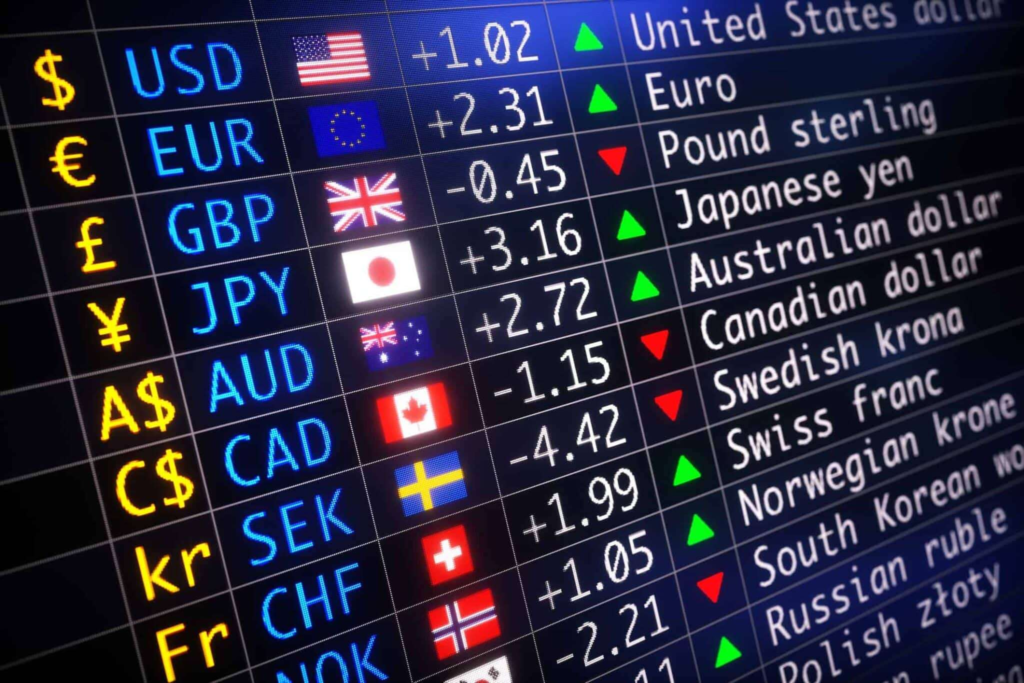
Introduction: Why Strategy Is Everything in Forex
The foreign exchange market is the largest and most liquid financial market in the world, processing over $7 trillion in daily trading volume. For beginners, that scale can feel both exciting and overwhelming. Many new traders dive in hoping to profit quickly — and most lose money early on because they lack a clear, tested strategy.
The good news? You don’t need a complex system to start trading forex profitably. What you need is a beginner-friendly strategy you understand deeply, the discipline to follow it consistently, and a firm grip on risk management. This guide breaks down the most effective forex trading strategies for beginners, explains how each one works, and shows you how to apply them in real market conditions.
What Is a Forex Trading Strategy?
A forex trading strategy is a structured set of rules that defines when you enter a trade, when you exit, how much you risk, and which currency pairs you focus on. A good strategy removes guesswork and emotional decision-making — two of the biggest killers of beginner trading accounts.
Strategies are typically built around one of two approaches:
- Technical analysis — using price charts, patterns, and indicators to predict future price movements
- Fundamental analysis — studying economic data, central bank decisions, and geopolitical events that drive currency valuations
Most beginner strategies lean on technical analysis because the signals are clear and visual, making them easier to learn and apply consistently.
5 Forex Trading Strategies Ideal for Beginners
1. Trend Following
Best for: Beginners who want simplicity and clear signals
Trend following is one of the oldest and most reliable approaches in forex trading. The core idea is straightforward: the market tends to move in sustained directions (trends), and your job is to identify that direction and trade with it — not against it.
How it works:
- Use the 50-day and 200-day moving averages (MA) on your chart
- When the 50 MA crosses above the 200 MA, it signals an uptrend — look for buy opportunities
- When the 50 MA crosses below the 200 MA, it signals a downtrend — look for sell opportunities
- Enter trades in the direction of the trend and hold until the trend shows signs of reversing
Why it works for beginners: It keeps you aligned with market momentum rather than fighting it. The signals are visual and easy to identify, and the strategy works across all major currency pairs.
2. Range Trading
Best for: Beginners trading in low-volatility markets
Not all currency pairs trend strongly at all times. During quieter periods, prices often oscillate between a clear support level (a floor) and a resistance level (a ceiling). Range trading takes advantage of this predictable behaviour.
How it works:
- Identify a currency pair trading within a horizontal channel on the daily or 4-hour chart
- Buy near the support level with a stop-loss just below it
- Sell (or close your buy) near the resistance level
- Avoid trading ranges during major news releases, which can break price out of the channel
Why it works for beginners: It provides clear entry and exit points with defined risk. You always know where you’re wrong before you enter the trade.
3. Breakout Trading
Best for: Beginners who want to catch big moves early
A breakout occurs when price moves decisively beyond a support or resistance level it has previously respected. Breakouts often signal the start of a new trend and can generate significant price movement quickly.
How it works:
- Look for a currency pair consolidating (moving sideways) near a key price level
- Wait for a confirmed candle close above resistance (for a buy) or below support (for a sell)
- Place your entry just beyond the breakout point and set a stop-loss inside the previous range
- Target a profit level at least twice the size of your risk (a 1:2 risk-to-reward ratio)
Why it works for beginners: With patience, this strategy puts you into high-probability trades at the beginning of a move — giving you favourable entries with manageable risk.
4. The Moving Average Crossover
Best for: Beginners who prefer indicator-based signals
This strategy uses two exponential moving averages (EMAs) of different lengths to generate buy and sell signals. It’s a refined version of trend following with more responsive signals.
How it works:
- Apply a 9-period EMA and a 21-period EMA to your chart
- When the 9 EMA crosses above the 21 EMA, enter a long (buy) trade
- When the 9 EMA crosses below the 21 EMA, enter a short (sell) trade
- Use the 1-hour or 4-hour chart for the most reliable signals
Why it works for beginners: It automates the decision-making process with precise signals, reducing the temptation to second-guess entries. It’s also easy to backtest on historical charts before risking real money.
5. The News-Based Strategy
Best for: Beginners who follow economic events closely
Major economic releases — such as non-farm payrolls (NFP), central bank interest rate decisions, and inflation data — cause significant volatility in currency markets. A news-based strategy involves preparing in advance and trading the reaction.
How it works:
- Use an economic calendar (available on sites like Forex Factory or Investing.com) to track upcoming high-impact events
- Identify which currency pairs are most affected by the upcoming release
- Wait for the news to be released, then trade in the direction of the initial strong move
- Use tight stop-losses, as news-driven moves can reverse sharply
Why it works for beginners: It teaches you to connect economic fundamentals with real price action — a critical skill for long-term trading success.
Risk Management: The Strategy Behind Every Strategy
No forex trading strategy works without sound risk management. Before applying any approach, commit to these non-negotiable rules:
- Never risk more than 1–2% of your account on a single trade. This ensures a losing streak won’t wipe you out.
- Always use a stop-loss. Every trade should have a defined exit point if the market moves against you.
- Aim for a minimum 1:2 risk-to-reward ratio. For every £1 you risk, target at least £2 in profit.
- Trade a demo account first. Practice your chosen strategy with virtual money until your results are consistently positive over at least 50 trades.
Choosing the Right Forex Broker
Your strategy is only as effective as the platform you execute it on. When selecting a broker as a beginner, prioritise:
- Regulation — choose brokers regulated by bodies like the FCA (UK), ASIC (Australia), or CySEC (EU)
- Low spreads — tighter spreads reduce your trading costs, especially important for shorter-term strategies
- A reliable trading platform — MetaTrader 4 (MT4) and MetaTrader 5 (MT5) are industry standards and beginner-friendly
- Educational resources — a broker that invests in trader education is a broker that wants you to succeed
Final Thoughts: Start Simple, Stay Consistent
The biggest mistake beginners make is jumping between strategies every time they experience a losing trade. Every strategy has losing periods — that’s simply the nature of financial markets. What separates successful traders from unsuccessful ones is the discipline to stick with a tested approach through the inevitable drawdowns.
Start with one strategy from this guide. Learn it thoroughly on a demo account. Define your risk rules before you ever enter a live trade. Then, only when you have consistent results, scale up gradually with real capital.
Forex trading rewards patience and preparation. The traders who last are not the ones who take the biggest risks — they’re the ones who manage risk the best.
Disclaimer: Forex trading involves significant risk of loss and is not suitable for all investors. Always ensure you fully understand the risks involved before trading with real capital. Past performance is not indicative of future results.